The team members at Interpersonal Reconstructive Therapy Lab are made up of experienced and dedicated researchers from a wide variety of disciplines and backgrounds. What unites them is an undying passion for learning and discovery. Meet them below.
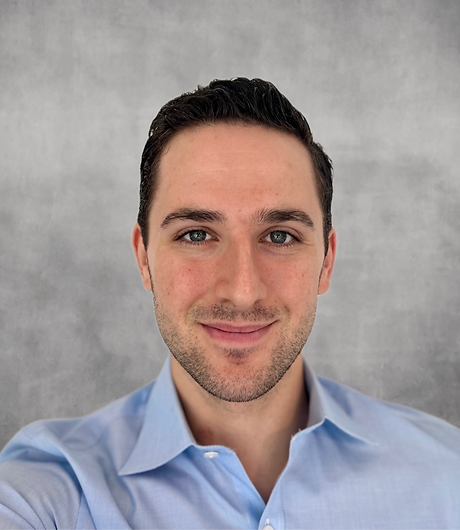
Andrew Floersheimer
Andrew is currently a 4th year pursuing his doctorate in Psychology at Ferkauf (Yeshiva University). He has balanced the development of his clinical skills working at externship sites such as Jewish Theological Seminary, Together CBT, and Jacobi Hospital while pursuing his research interests related to patient perspectives of therapy and therapists with Dr. Katie Aafjes-van Doorn and Dr. Kenneth Critchfield. He enjoys his work as a part of the student government trying to serve his peers and broader school community while making positive changes in the program. Outside of school, he is passionate about cooking and dancing especially when shared with others.

Ekin Kiyici
Ekin Kiyici is a 4th-year Clinical Psychology Psy.D. Candidate at the Ferkauf Graduate School of Psychology. She earned a B.S. in Psychobiology from the University of California, Los Angeles where she supported research on the interaction between well-being and prosocial behavior within Adolescent and Young Adult cancer survivors, as well as the efficacy of Internet-based CBT. While in her graduate studies, she provided trauma-informed psychodynamic psychotherapy to refugees and asylum seekers at the International Rescue Committee (IRC) and to individuals with severe mental illness on an inpatient psychiatric unit in the Bronx. Her interests have expanded into global mental health, activism sustainability, and systems-oriented thinking, and complex trauma. These interests have guided her to research patterns of relatedness to groups or systems, looking at forms of engagement in human rights movement with a specific focus on Palestine. Next year, she will be interning at Pace University College Counseling, where she will be providing trauma-informed and relational individual and group psychodynamic psychotherapy.

Hallie Goldman
Hallie is a 4th year doctoral student. She completed her dissertation, “Rethinking the Mind-Body Connection: An Interpersonal Framework Linking Personality and Health Through SASB and Copy Process Theory.” Hallie will be completing her internship at the New Jersey VA.

Marly Susserman
Marly Suesserman is a third-year student in the Clinical Psychology PsyD program at Ferkauf Graduate School of Psychology. She earned her B.S. in Cognitive Studies and Medicine, Health, & Society from Vanderbilt University and previously worked in healthcare consulting and a group psychology practice. Marly is currently a pre-doctoral extern at Northwell Health’s Zucker Hillside Hospital, where she provides CBT- and DBT-informed psychotherapy to college students across inpatient and outpatient settings. She works with individuals presenting with mood and anxiety disorders, psychosis, PTSD, and complex trauma. She also trains at the Parnes Clinic, where she provides individual CBT to adults. Marly previously completed a neuropsychology externship at Montefiore’s Neuropsychology Assessment Service, conducting comprehensive evaluations across diverse clinical populations. Her clinical approach draws from CBT, DBT, and ACT. Marly's current research interests focus on grief, bereavement, and attachment, with a particular emphasis on how interpersonal patterns (conceptualized through the Structural Analysis of Social Behavior (SASB) model) inform meaning-making and adaptation following the loss of a parent.

Harry Gordon
Harry is a third-year student in the Clinical Psychology Psy.D. program at the Ferkauf Graduate School of Psychology. Before Ferkauf, Harry completed his M.A. in Psychology in Education at Teachers College, Columbia University, where his research focused on interactions between spirituality and mental health. Harry has worked on projects examining various elements of the psychotherapy process, including the “real relationship” between clients and clinicians, “moments of meeting” in the therapy dyad, and the "therapeutic alliance" in forensic settings. As a member of Dr. Critchfield’s lab, Harry’s work on psychotherapy process has expanded to explorations of the psychotherapy research process — his dissertation focuses on ethics and best practices around the use of therapy recordings and transcripts in research, particularly in the context of the advent of artificial intelligence. Clinically, Harry has trained in psychodynamic and psychoanalytic approaches at the Jewish Theological Seminary, the Parnes Clinic, and the New York University Postdoctoral Program in Psychotherapy and Psychoanalysis.

Claire is a second-year student in the Clinical Psychology Psy.D. program at Ferkauf Graduate School of Psychology. She received her BA in psychology with a minor in religious studies from Franklin & Marshall College in 2020. She then attended Teachers College, Columbia University and received her MA in Psychology in Education, Counseling and Clinical Psychology in 2022. She served as a research assistant in the Spirituality & Psychology Lab at Teachers College and was involved with a project exploring a mindfulness-based, spiritually oriented intervention aimed at improving the mental health and wellbeing of undergraduates at Columbia and Barnard. Claire's clinical and research interests focus on the intersection of spirituality and psychology, as well as the role of attachment patterns in psychosocial development. Her hobbies include creating artwork and attending concerts.
Claire Stargard

Ellie Stroh
Ellie Stroh is a doctoral student in Clinical Psychology (Psy.D.) at Ferkauf Graduate School of Psychology. She is a member of the Interpersonal Reconstructive Therapy (IRT) Lab, where her interests center on attachment processes, internalized relational patterns, and how early interpersonal experiences shape adult psychopathology and treatment engagement. Ellie’s research background includes work at MD Anderson Cancer Center examining the role of attachment styles in psychological distress among oncology patients. Clinically, she is especially interested in working with young and middle-aged adults, with a focus on trauma, personality dynamics, and chronic relational difficulties. She is drawn to attachment-oriented and psychodynamic approaches to assessment and intervention, with an emphasis on integrating empirically informed, relationship-focused models such as IRT into clinical practice.
